Lifestyle
Të rinjtë përballë riskut: A po bëjmë mjaftueshëm për të parandaluar aksesin ndaj nikotinës, alkoolit dhe ndikimeve të dëmshme?
8 Maj, 2026 | 11:01 am

Në një kohë kur adoleshentët ekspozohen gjithnjë e më herët ndaj produkteve me nikotinë, alkoolit, presionit social dhe ndikimeve të pakontrolluara të botës digjitale, ekspertët paralajmërojnë se sfida nuk mund të trajtohet më vetëm me ndalime formale. Gjatë Lifestyle Conference 2026, kjo tematikë u kthye në një nga diskutimet më të rëndësishme të konferencës, duke sjellë në të njëjtën tryezë psikologë, sociologë, ekspertë të shëndetit publik dhe profesionistë të edukimit për të diskutuar mbi mënyrat se si shoqëria mund të mbrojë më mirë brezat e rinjnga sjelljet me risk.

Paneli “Psikologjia e të rinjve, duhanpirja dhe reduktimi i dëmit” trajtoi fenomenin e aksesit të hershëm ndaj produkteveme nikotinë dhe alkool jo vetëm si problem shëndetësor, por si një çështje komplekse sociale, emocionale dhe edukative. Ekspertët theksuan se adoleshenca mbetet një periudhë ku të rinjtë kërkojnë të eksperimentojnë, të sfidojnë kufijtë dhe të krijojnë identitetin e tyre, shpesh të ndikuar nga mjedisi, rrjetetsociale dhe presioni i grupit.

Psikologia klinike Prof. Asoc. Besmira Lahi theksoi se shumë prej sjelljeve me risk tek adoleshentët janë sinjale të një boshllëku emocional që ata nuk dinë ta adresojnë ndryshe. Sipas saj, duhanpirja apo përdorimi i vape-ve shpesh nuk janëproblemi kryesor, por simptomë e ankthit, izolimit, bullizmit apo mungesës së komunikimit në familje. Ajo nënvizoi se prindërit shpesh fokusohen tek produkti apo sjellja, pa kuptuar arsyet psikologjike që qëndrojnë pas saj.


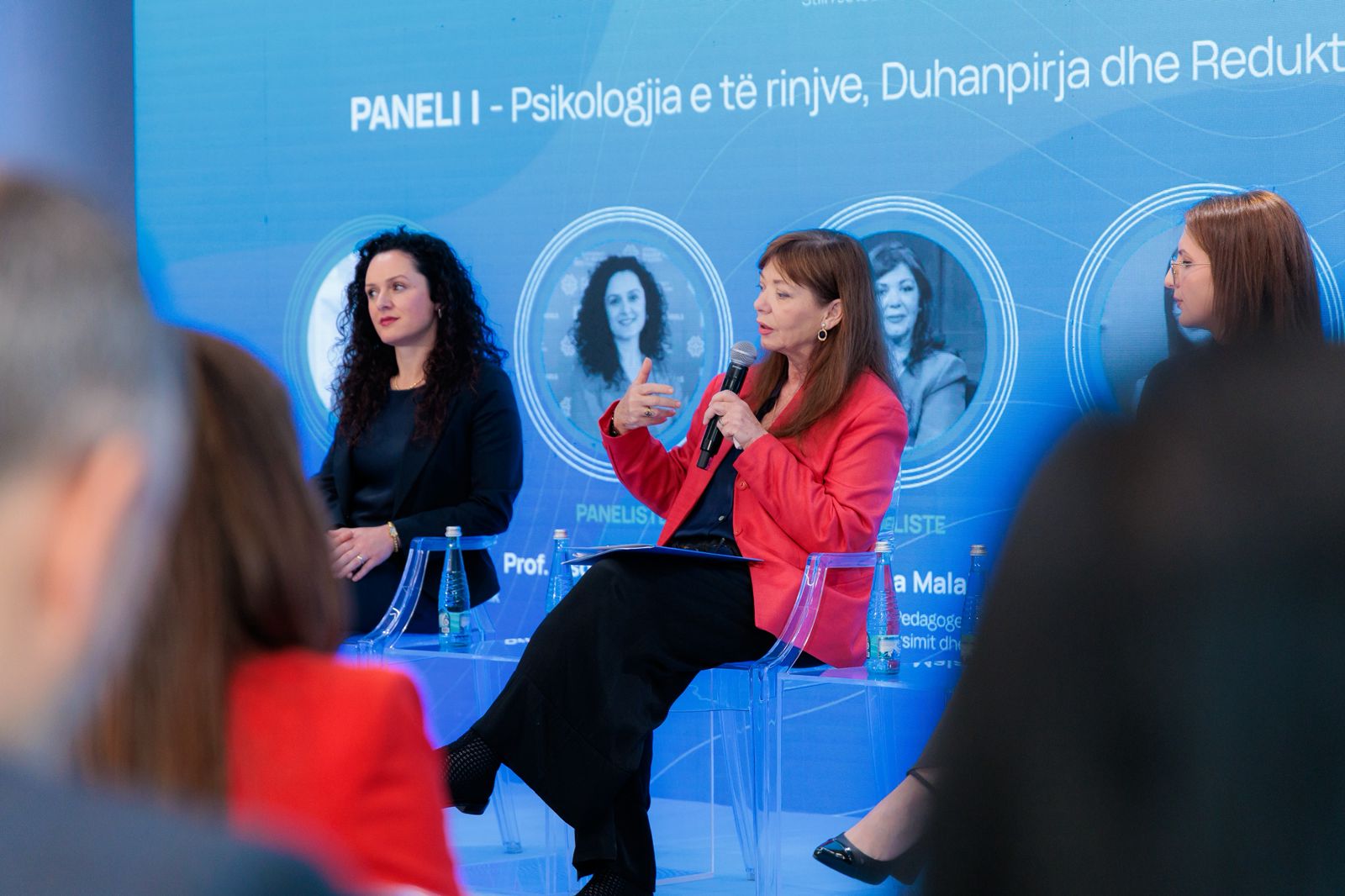
Një dimension tjetër i rëndësishëm i diskutimit ishte ndikimi i rrjeteve sociale dhe ndryshimi i mënyrës si të rinjtë ndërtojnë sot marrëdhëniet dhe perceptimin për veten. Sociologia dhe pedagogia Dr. Nora Malaj solli shembuj konkretë nga puna e saj me adoleshentë, duke treguar se shumë prej tyre ndihen emocionalisht të pambështetur dhe kërkojnë “pranim” apo identitet përmes sjelljeve që perceptohen si moderne apo të pranueshme nga grupi. Sipas saj, prindërimi sot kërkon më shumë vëmendje, empati dhe komunikim sesa kontroll të ashpër.
Ekspertët theksuan se ndalimet ligjore kanë efekt të kufizuar nëse nuk shoqërohen me edukim dhe ndërgjegjësim të vazhdueshëm. Mjeku dhe eksperti i kontrollit të duhanit Dr. Roland Shuperka solli në vëmendje shembuj europianë, ku reduktimi i duhanpirjes është shoqëruar me politika të forta edukimi, sensibilizimi dhe kontrolli të tregut. Sipas tij, mbrojtja e të rinjve kërkon jo vetëm zbatim korrekt të ligjit, por edhe informacion të vazhdueshëm për prindërit, shkollat dhe komunitetin.
Një pjesë e rëndësishme e diskutimit u fokusua edhe tek roli i shkollës dhe institucioneve arsimore. Përfaqësues të sektorit tëarsimit folën për nevojën e forcimit të moduleve edukative mbijetesën e shëndetshme, si dhe për rëndësinë e rolit tëpsikologëve dhe punonjësve socialë në identifikimin e hershëmtë problematikave tek adoleshentët. Sipas ekspertëve, të rinjtëkanë nevojë për më shumë hapësira komunikimi, mbështetjeemocionale dhe edukim praktik mbi mënyrën si të menaxhojnëpresionin social dhe emocionet e tyre.
Diskutimi solli në vëmendje edhe realitetin europian, kuparandalimi i aksesit të të rinjve ndaj produkteve të dëmshmetrajtohet si një përgjegjësi kolektive mes familjes, shkollës, komunitetit dhe institucioneve publike. Ekspertët theksuan se përvoja europiane ka treguar se edukimi i hershëm, komunikimii hapur dhe ndërgjegjësimi publik janë po aq të rëndësishme savetë ligji.
Mesazhi kryesor që përcolli paneli ishte i qartë: mbrojtja e tërinjve nuk fillon tek ndëshkimi, por tek komunikimi, kujdesi dhendërtimi i marrëdhënieve më të shëndetshme. Në një realitet kuproduktet me nikotinë, alkooli dhe ndikimet digjitale janëgjithnjë e më të pranishme, sfida nuk është vetëm të kufizohetaksesi, por të ndërtohet një kulturë më e fortë ndërgjegjësimidhe përgjegjësie për brezat e rinj. 
Young People at Risk: Are We Doing Enough to Prevent Access to Nicotine, Alcohol, and Harmful Digital Influences?
At a time when adolescents are being exposed at increasingly younger ages to nicotine products, alcohol, social pressure, and uncontrolled digital influences, experts warn that the issue can no longer be addressed through restrictions alone. During Lifestyle Conference 2026, this topic became one of the conference’s central discussions, bringing together psychologists, sociologists, public health experts, and education professionals to explore how society can better protect younger generations from risky behaviors.
The panel “Youth Psychology, Smoking, and Harm Reduction” approached early access to nicotine products and alcohol not only as a public health concern, but as a broader social, emotional, and educational challenge. Speakers emphasized that adolescence is a stage marked by experimentation, identity formation, and the desire to fit in, often influenced by peer pressure, social media, and the surrounding environment.
Clinical psychologist Associate Professor Besmira Lahihighlighted that many risky behaviors among teenagers are signs of emotional gaps they do not know how to address differently. According to her, smoking or vaping is often not the core issue itself, but rather a symptom of anxiety, isolation, bullying, family communication problems, or emotional distress. She stressed that parents frequently focus on the visible behavior while overlooking the psychological reasons behind it.
Another important dimension of the discussion focused on the influence of social media and the changing way young people build relationships and perceive themselves today. Sociologist and educator Dr. Nora Malaj shared real-life examples from her work with adolescents, explaining that many teenagers feel emotionally unsupported and seek acceptance or identity through behaviors perceived as “cool” or socially desirable. According to her, modern parenting requires more empathy, communication, and emotional presence rather than rigid control.
Experts also emphasized that legal restrictions alone have limited impact if they are not accompanied by education and long-term awareness efforts. Tobacco control expert Dr. Roland Shuperka referred to European examples where smoking reduction has been supported through education, public awareness, and stronger market regulation. He noted that protecting young people requires not only proper law enforcement, but also continuous communication with parents, schools, and communities.
A significant part of the discussion focused on the role of schools and educational institutions. Representatives from the education sector highlighted the importance of strengthening educational modules related to healthy lifestyles, while also reinforcing the role of school psychologists and social workers in identifying early warning signs among adolescents. According to the panelists, young people need more safe spaces for communication, emotional support, and practical education on how to manage peer pressure and emotional challenges.
The conversation also reflected broader European approaches, where preventing youth access to harmful products is treated as a shared responsibility between families, schools, communities, and public institutions. Experts underlined that European experience has shown that early education, open communication, and public awareness are just as important as legislation itself.
The panel ultimately delivered a clear message: protecting young people does not begin with punishment, but with communication, care, and stronger human relationships. In a reality where nicotine products, alcohol, and harmful digital influences are increasingly present, the challenge is not only to restrict access, but to build a stronger culture of awareness, responsibility, and emotional support for younger generations.